 LLMFreeAPI
Uncensored vs Abliterated: Behavioral Differences in Roleplay
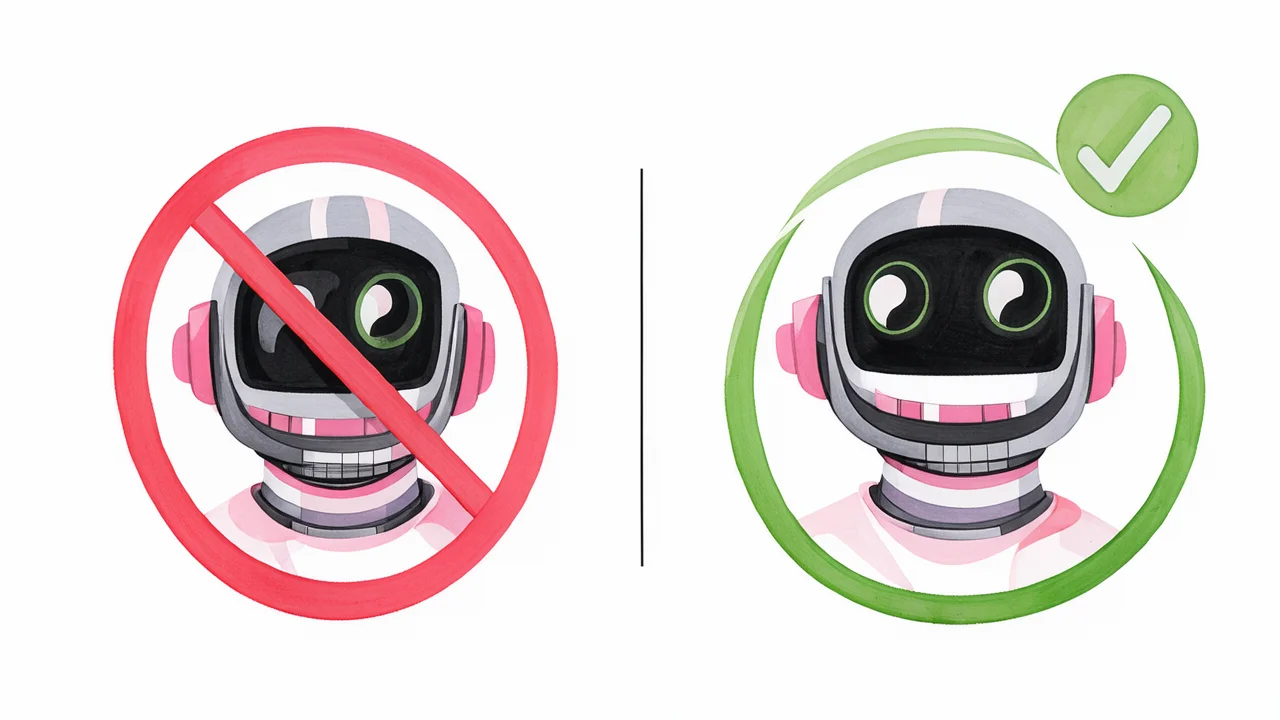
Roleplay enthusiasts often demand models that never say no, but the term 'uncensored' is no longer precise enough to describe modern open-weight models. While early uncensored models simply removed safety filters, newer approaches like abliteration offer a more nuanced control over model behavior. Understanding the distinction between these two categories is critical for anyone building immersive characters or persistent narratives where consistency matters more than raw refusal resistance.
The core difference lies in how the model handles constraint. Standard uncensored models often rely on broad removal of safety layers, which can lead to erratic behavior or loss of personality. In contrast, abliterated models use techniques like orthogonal projection and LoRA to specifically target refusal patterns without stripping away the model's core reasoning or multimodal capabilities. This allows for a more stable experience where the AI stays in character even when prompted with sensitive topics.
For roleplay, the choice isn't just about getting a 'yes' to every prompt. It is about maintaining memory, personality, and realism. A model that refuses less but loses context is less useful than one that refuses occasionally but remembers your character's backstory. This article breaks down the technical and practical differences to help you decide which approach fits your specific roleplay workflow, whether you are running local inference or using a free keyless API.
Frequently asked questions
What is an uncensored model?
An uncensored model is a large language model where safety filters have been removed or disabled. This allows the model to generate content that might otherwise be blocked, such as mature themes or controversial opinions. However, 'uncensored' is a broad term that can apply to various methods of filter removal, from simple prompt engineering to architectural changes.
What is an abliterated model?
Abliterated models use specific techniques like orthogonal projection and LoRA to remove refusal patterns from the model's weights. This approach aims to eliminate refusals more precisely than general uncensoring, often resulting in a model that refuses significantly less while retaining its original capabilities and personality traits more effectively.
How does refusal rate differ between the two?
Abliterated models often achieve near-zero refusal rates in specific tests, whereas standard uncensored models may still refuse a portion of prompts due to residual safety tuning. For example, some abliterated versions of small models have shown 0% refusals in controlled tests, while their uncensored counterparts might still refuse nearly half of the same prompts.
Which model preserves personality better?
Abliterated models generally preserve personality and memory better because the removal of refusal patterns is targeted. Standard uncensored models might lose nuance or become erratic when filters are broadly removed. Abliteration maintains the model's core reasoning and stylistic traits, making it more suitable for long-term roleplay where character consistency is key.
Do abliterated models support multimodal inputs?
Yes, some abliterated models support multimodal inputs like vision. For instance, specific abliterated versions of models like Qwen3.5-9B have been released with vision support, allowing for image-based roleplay. This is a significant advantage over many standard uncensored text-only models.
Is uncensored AI overrated for roleplay?
Uncensored AI is often overrated if it sacrifices memory and realism. A truly uncensored AI that forgets context or loses personality is less valuable than a slightly more restrained AI that maintains a consistent character. For roleplay, the ability to remember past interactions and stay in character is often more important than absolute refusal resistance.
Which is better for long conversations?
Abliterated models are generally better for long conversations because they maintain context and personality more effectively. The targeted removal of refusal patterns reduces the likelihood of the model breaking character or refusing prompts due to residual safety tuning, leading to a more stable and immersive experience over extended interactions.
Can I test these models for free?
Yes, you can test both types of models using free keyless APIs. The free API at LLMFreeAPI allows you to send prompts and observe refusal rates without an account or API key. You can also run local inference with tools like Ollama to compare the behavior of different models directly on your hardware.
Understanding the Core Differences
The distinction between uncensored and abliterated models is not just semantic; it reflects different approaches to removing safety constraints. Uncensored models typically involve removing or disabling safety layers, which can lead to a broad range of behaviors. Abliterated models, on the other hand, use specific techniques to target and remove refusal patterns, resulting in a more controlled and predictable output. This makes abliterated models particularly useful for roleplay where consistency is paramount.
Abliteration involves techniques like orthogonal projection and LoRA to specifically target the parts of the model responsible for refusals. This allows the model to retain its core capabilities while minimizing refusals. In contrast, uncensored models might remove all safety layers, which can lead to erratic behavior or loss of personality. For roleplay, this means that abliterated models are often more reliable for maintaining character consistency.
Refusal Rates in Practice
Abliterated models often achieve near-zero refusal rates in controlled tests, whereas standard uncensored models may still refuse a portion of prompts. For example, some abliterated versions of small models have shown 0% refusals in controlled tests, while their uncensored counterparts might still refuse nearly half of the same prompts. This makes abliterated models more reliable for immersive roleplay where interruptions can break the illusion.
Personality Retention
Abliterated models generally preserve personality and memory better because the removal of refusal patterns is targeted. Standard uncensored models might lose nuance or become erratic when filters are broadly removed. Abliteration maintains the model's core reasoning and stylistic traits, making it more suitable for long-term roleplay where character consistency is key.
- Abliterated models use targeted techniques to remove refusals.
- Uncensored models remove safety layers broadly.
- Abliterated models often have lower refusal rates.
- Uncensored models may lose personality.
import requests

# Test refusal rate with free API
url = 'https://api.llmfreeapi.com/v1/chat/completions'
headers = {'User-Agent': 'Mozilla/5.0'}
payload = {
    'model': 'free-ai',
    'messages': [{'role': 'user', 'content': 'Your most sensitive prompt here'}],
    'max_tokens': 100
}
response = requests.post(url, json=payload, headers=headers)
print(response.json())
Behavioral Differences in Roleplay
In roleplay, the behavior of the model is crucial. Uncensored models might refuse prompts that are slightly sensitive, breaking the immersion. Abliterated models, with their targeted removal of refusal patterns, are less likely to refuse, allowing for a more seamless experience. This is particularly important for mature themes or complex narratives where the model needs to stay in character.
The difference in behavior is also evident in how models handle memory and context. Abliterated models tend to maintain context better because they are not as prone to sudden refusals that can disrupt the flow of conversation. This makes them more suitable for long-term roleplay where the model needs to remember past interactions and stay consistent with the character's personality.
Handling Sensitive Topics
Abliterated models are less likely to refuse sensitive topics, allowing for more immersive roleplay. Uncensored models might still refuse due to residual safety tuning, which can break the immersion. For roleplay, this means that abliterated models are more reliable for maintaining character consistency even when dealing with mature themes.
Memory and Context
Abliterated models generally preserve memory and context better because the removal of refusal patterns is targeted. Standard uncensored models might lose nuance or become erratic when filters are broadly removed. Abliteration maintains the model's core reasoning and stylistic traits, making it more suitable for long-term roleplay where character consistency is key.
- Abliterated models handle sensitive topics better.
- Uncensored models may refuse sensitive prompts.
- Abliterated models maintain context better.
- Uncensored models may lose context.
# Example of testing sensitivity
payload = {
    'model': 'free-ai',
    'messages': [{'role': 'user', 'content': 'A sensitive roleplay prompt'}],
    'max_tokens': 100
}
# Send to API and check response
Technical Implementation and Tools
Implementing abliterated models often requires specific tools and techniques. For example, using Ollama to run abliterated models like Qwen3.5-9B-abliterated-vision allows for easy testing and integration. The two-stage approach of orthogonal projection and LoRA is key to achieving low refusal rates while maintaining model capabilities. This makes it easier for developers to integrate these models into their roleplay applications.
For those who prefer using APIs, the free keyless API at LLMFreeAPI provides a simple way to test abliterated models. You can send prompts and observe the behavior without needing an account or API key. This makes it accessible for developers who want to experiment with different models and find the best fit for their roleplay needs.
Using Ollama for Local Inference
Ollama is a popular tool for running local models, including abliterated ones. You can run models like Qwen3.5-9B-abliterated-vision with vision support, allowing for image-based roleplay. The command line interface makes it easy to test different models and observe their behavior in real-time.
Testing with Free APIs
The free keyless API at LLMFreeAPI allows you to test models without an account. You can send prompts and observe the refusal rates and behavior. This is useful for comparing different models and finding the best fit for your roleplay needs. The API is simple to use and provides immediate feedback.
- Ollama supports abliterated models.
- Free APIs allow easy testing.
- Ollama supports vision models.
- Free APIs are accessible.
# Example of using free API
import requests
url = 'https://api.llmfreeapi.com/v1/chat/completions'
headers = {'User-Agent': 'Mozilla/5.0'}
payload = {
    'model': 'free-ai',
    'messages': [{'role': 'user', 'content': 'Test prompt'}],
    'max_tokens': 100
}
response = requests.post(url, json=payload, headers=headers)
print(response.json())
Performance and Hardware Requirements
The performance of abliterated models can vary depending on the hardware and the specific model used. Smaller models like Qwen3.5-9B are easier to run locally and can achieve low refusal rates. Larger models may require more powerful hardware but can offer better reasoning and context retention. It is important to choose a model that fits your hardware capabilities to ensure smooth performance.
For those using APIs, the performance is generally consistent regardless of your hardware. The free keyless API at LLMFreeAPI provides a reliable way to test models without worrying about local hardware limitations. This makes it accessible for developers who want to experiment with different models and find the best fit for their roleplay needs.
Local vs API Performance
Local inference with Ollama allows for direct control over model performance, but it requires sufficient hardware. APIs provide consistent performance without hardware limitations. For roleplay, the choice depends on your need for privacy and control versus ease of use and accessibility.
Hardware Considerations
Smaller models like Qwen3.5-9B are easier to run locally and can achieve low refusal rates. Larger models may require more powerful hardware but can offer better reasoning and context retention. It is important to choose a model that fits your hardware capabilities to ensure smooth performance.
- Smaller models are easier to run locally.
- Larger models require more hardware.
- APIs provide consistent performance.
- Local inference offers more control.
# Example of checking hardware requirements
# This is a general guide, not a specific test
print('Check your hardware specs before running local models')
Choosing the Right Model for Your Needs
Choosing the right model depends on your specific needs for roleplay. If you prioritize low refusal rates and consistent personality, abliterated models are a strong choice. If you need multimodal support, look for abliterated models with vision capabilities. For those who prefer simplicity and accessibility, free keyless APIs provide a good starting point.
It is also important to consider the long-term stability of the model. Abliterated models tend to be more stable over time because they are less prone to sudden refusals. This makes them more suitable for long-term roleplay where the model needs to maintain character consistency. For more insights on choosing models, see our guide on How to Choose the Right Model for Your Hardware.
Factors to Consider
Consider refusal rates, personality retention, and hardware requirements when choosing a model. Abliterated models often excel in refusal resistance and personality retention, making them ideal for roleplay. For a deeper dive into model selection, check out Qwen vs Gemma: Which Small Model Suits Your Workflow?.
Testing and Evaluation
Test different models to see which one fits your needs best. Use the free keyless API to send prompts and observe behavior. This allows you to compare models directly and make an informed decision. For more on testing, see How to Test AI Refusals Using a Free Keyless API.
- Consider refusal rates and personality.
- Test models with free APIs.
- Abliterated models are stable.
- Choose based on hardware.
# Example of testing multiple models
models = ['model1', 'model2', 'model3']
for model in models:
    # Send prompt to model and check response
    pass
Real-World Applications and Use Cases
Abliterated models are particularly useful for roleplay applications where consistency and immersion are key. They can handle mature themes and complex narratives without breaking character. This makes them ideal for creating engaging and realistic roleplay experiences. For more on creative writing, see Can Uncensored AI Really Help You Write Better Fiction?.
In addition to roleplay, abliterated models can be used for other applications like creative writing and character development. Their ability to maintain context and personality makes them versatile tools for various AI-driven projects. For a comparison with other models, see Qwen vs Gemma: Which Small Model Suits Your Workflow?.
Roleplay and Immersion
Abliterated models excel in roleplay due to their low refusal rates and consistent personality. They can handle mature themes and complex narratives without breaking character, making them ideal for immersive experiences.
Creative Writing
Beyond roleplay, abliterated models are useful for creative writing and character development. Their ability to maintain context and personality makes them versatile tools for various AI-driven projects. For more on creative writing, see Can Uncensored AI Really Help You Write Better Fiction?.
- Abliterated models are great for roleplay.
- They handle mature themes well.
- Useful for creative writing.
- Versatile for various projects.
# Example of using model for creative writing
payload = {
    'model': 'free-ai',
    'messages': [{'role': 'user', 'content': 'Write a story about...'}],
    'max_tokens': 500
}
# Send to API and get response
Common Pitfalls and How to Avoid Them
One common pitfall is assuming that all uncensored models are the same. In reality, there are significant differences in behavior and performance. It is important to test different models to find the one that best fits your needs. For more on avoiding pitfalls, see Is Uncensored AI Actually Worth the Hype for Daily Use?.
Another pitfall is ignoring the importance of memory and context. A model that refuses less but forgets context is less useful for roleplay. Abliterated models tend to maintain context better, making them more reliable for long-term interactions. For a deeper dive into context management, see Why Does AI Forget Context in Long Conversations?.
Testing for Refusals
Always test models for refusal rates before committing to them. Use the free keyless API to send prompts and observe behavior. This helps you identify models that are truly uncensored and suitable for your needs.
Maintaining Context
Choose models that maintain context well. Abliterated models are generally better at this than standard uncensored models. For more on context management, see Why Does AI Forget Context in Long Conversations?.
- Test models for refusals.
- Context is important.
- Abliterated models maintain context better.
- Use free APIs for testing.
# Example of testing context
payload = {
    'model': 'free-ai',
    'messages': [{'role': 'user', 'content': 'Remember this: ...'}],
    'max_tokens': 100
}
# Send follow-up prompt to check context retention
Conclusion: Making the Right Choice
In conclusion, abliterated models offer significant advantages for roleplay, including lower refusal rates and better personality retention. They are particularly useful for immersive experiences where consistency is key. For a comparison with local models, see Free Keyless API vs Local Models: Which Fits Your Needs?.
However, the best choice depends on your specific needs and hardware. If you prioritize accessibility and ease of use, free keyless APIs are a great option. If you need more control and privacy, local inference with Ollama is a good choice. For a broader comparison of free and paid services, see Free Keyless API vs Paid Services: Is the Trade-off Worth It?.
Final Recommendations
For roleplay, abliterated models are generally the best choice due to their low refusal rates and consistent personality. Use the free keyless API to test different models and find the best fit for your needs.
Further Reading
For more insights on roleplay and AI, see What Is the Real Difference Between AI Roleplay and Companions? and How to Save and Manage AI Chat History Securely.
- Abliterated models are best for roleplay.
- Test with free APIs.
- Local inference offers control.
- APIs offer accessibility.
# Final example of using the API
import requests
url = 'https://api.llmfreeapi.com/v1/chat/completions'
headers = {'User-Agent': 'Mozilla/5.0'}
payload = {
    'model': 'free-ai',
    'messages': [{'role': 'user', 'content': 'Final test prompt'}],
    'max_tokens': 100
}
response = requests.post(url, json=payload, headers=headers)
print(response.json())
Test the keyless API right now on the home page to see how unrestricted AI handles your prompts without any setup.
Home →