 LLMFreeAPI
Cloud API vs Local Hardware: The Privacy and Speed Trade-off

Running an AI model locally offers complete data sovereignty, but it demands significant hardware investment and technical configuration. In contrast, a cloud-based API like LLMFreeAPI provides immediate access to a capable 35B-parameter model without upfront costs or complex setup. The choice between these two approaches depends entirely on your specific needs regarding data sensitivity, budget, and performance expectations.
Local models keep your data on your machine, ensuring that no third party sees your prompts. However, achieving competitive speeds often requires expensive GPUs and careful optimization of quantization and parallel requests. Cloud APIs, on the other hand, offload the computational heavy lifting to remote servers, offering consistent performance regardless of your local hardware, though they introduce a layer of network latency and data transmission.
This article examines the practical trade-offs between these two models. We will explore how local hardware impacts privacy and speed, how cloud APIs simplify access, and which option suits different workflows. By understanding the strengths and limitations of each, you can make an informed decision that aligns with your technical capabilities and privacy requirements.
Frequently asked questions
What is a local LLM?
A local LLM is an AI model that runs directly on your computer’s hardware, such as your CPU or GPU. It processes your prompts and generates responses without sending data to a remote server. This setup ensures that your input data remains entirely on your device, offering maximum privacy and control over your information.
What is a cloud API?
A cloud API is a remote service that allows you to send prompts to an AI model hosted on a server. You interact with it via HTTP requests, and the server returns the generated text. While convenient and often free, this method involves transmitting your data over the internet, which introduces potential privacy considerations compared to local execution.
How does privacy differ between local and cloud models?
Local models offer superior privacy because your data never leaves your machine. Cloud APIs, like LLMFreeAPI, log technical details such as IP addresses and user agents for operational purposes, though they do not store long-term personal profiles. For sensitive data, local execution is safer, while cloud APIs are suitable for general use where data retention is minimal.
How does speed compare between local and cloud models?
Local speed depends heavily on your hardware, particularly your GPU’s memory and bandwidth. High-end GPUs can achieve impressive tokens per second, but performance may drop with complex models or multiple parallel requests. Cloud APIs provide consistent speeds regardless of your local hardware, though they are subject to network latency and server load, which can cause occasional delays.
Which is better for coding tasks?
Local models are ideal for coding if you need to process proprietary code snippets without exposing them to external servers. Cloud APIs like LLMFreeAPI are excellent for general coding assistance, offering quick access to a capable model without hardware constraints. Choose local for sensitive code, and cloud for general productivity and ease of use.
Which is better for privacy-conscious users?
Local LLMs are the best choice for privacy-conscious users because they eliminate the need to transmit data over the internet. Cloud APIs involve some data transmission, though LLMFreeAPI minimizes retention and offers a keyless, free access model. If absolute data isolation is your priority, local execution is the superior option.
Which is better for users with limited hardware?
Cloud APIs are better for users with limited hardware, as they do not require expensive GPUs or large amounts of RAM. LLMFreeAPI provides access to a robust model without any hardware requirements. Local models demand significant computational resources to run smoothly, making them less accessible for users with older or less powerful devices.
Which is better for high-volume usage?
High-volume usage can be challenging for both options. Local models may struggle with heat and power consumption during sustained loads, while cloud APIs have daily request limits. For heavy usage, local hardware offers unlimited requests if you have the resources, while cloud APIs offer convenience with defined quotas.
Understanding Local LLMs: Privacy and Hardware Demands
Local LLMs provide the highest level of privacy by keeping all data on your machine. When you run a model locally, your prompts and responses never leave your device, ensuring that no third party can access your information. This is particularly important for users handling sensitive data, such as proprietary code, personal documents, or confidential business information. The ability to control exactly where your data resides gives you peace of mind and reduces the risk of data breaches or unauthorized access.
However, running a local LLM requires significant hardware resources. To achieve competitive speeds, you need a powerful GPU with ample VRAM, or a high-end laptop with Apple Silicon. For example, a MacBook Pro with a powerful chip and ample unified memory can handle large models efficiently, but even then, performance may vary depending on the model’s size and quantization. The initial investment in hardware can be substantial, and you must also manage software dependencies, model downloads, and optimization settings to get the best performance.
Hardware Requirements for Local Models
Running a local LLM requires a GPU with sufficient VRAM to load the model weights. For a large model, you need significant VRAM for higher precision, or less for quantized versions. Apple Silicon chips offer efficient unified memory, allowing them to handle large models with less power consumption than traditional GPUs. However, you must also ensure your system has adequate cooling and power supply to sustain long inference sessions without throttling.
Optimizing Local Performance
To maximize speed, you can use quantization techniques to reduce the model’s memory footprint. Tools like llama.cpp allow you to optimize inference with multi-threading and parallel request handling. For instance, running multiple requests in parallel can significantly improve throughput, but it also increases VRAM usage. Balancing these factors requires experimentation and a good understanding of your hardware’s capabilities.
- Local models keep data on your device for maximum privacy.
- High-end GPUs are required for fast inference speeds.
- Quantization reduces memory usage but may impact accuracy.
- Parallel request handling improves throughput on capable hardware.
Cloud APIs: Convenience and Accessibility
Cloud APIs offer a convenient alternative to local models by hosting the AI infrastructure on remote servers. This approach eliminates the need for expensive hardware, allowing users to access powerful models from any device with an internet connection. LLMFreeAPI, for example, provides a free, keyless API that is compatible with the OpenAI format, making it easy to integrate into existing applications. You can start using the API immediately without setting up local environments or managing model updates.
The trade-off for this convenience is that your data is transmitted to the server. While LLMFreeAPI does not store long-term personal profiles and uses the data only for technical logging, it is still processed on a remote machine. This means that for highly sensitive data, local execution remains the safer option. However, for general use cases where privacy concerns are minimal, cloud APIs provide a seamless and efficient experience with minimal setup.
Ease of Integration
Cloud APIs are designed for easy integration into applications. LLMFreeAPI supports standard OpenAI-compatible endpoints, allowing you to use familiar libraries like the OpenAI SDK or requests in Python. This compatibility simplifies the development process, as you can switch between different AI providers without major code changes. The API also supports streaming responses, which is useful for real-time applications and improving user experience.
Cost Efficiency
Cloud APIs like LLMFreeAPI are free to use, making them an attractive option for users who want to avoid hardware costs. There are no upfront investments in GPUs or servers, and you pay only for what you use, if anything. This cost efficiency is particularly beneficial for developers and small teams who need access to powerful models without the financial burden of maintaining local infrastructure.
- Cloud APIs offer easy integration with standard libraries.
- No upfront hardware costs are required for cloud access.
- Data is transmitted to the server, which may affect privacy.
- Free access makes cloud APIs cost-effective for many users.
import requests

url = "https://api.llmfreeapi.com/v1/chat/completions"
headers = {"User-Agent": "MyApp/1.0"}
data = {
    "model": "free-ai",
    "messages": [{"role": "user", "content": "Hello, how are you?"}],
    "max_tokens": 100
}
response = requests.post(url, json=data, headers=headers)
print(response.json()['choices'][0]['message']['content'])
Privacy Considerations: Local vs Cloud
Privacy is a critical factor when choosing between local and cloud AI solutions. Local models offer the highest level of privacy because all data processing occurs on your device. Your prompts and responses are not transmitted over the internet, reducing the risk of data interception or unauthorized access. This is particularly important for users handling sensitive information, such as medical records, legal documents, or proprietary code. With local models, you have complete control over your data, and there is no reliance on third-party servers.
Cloud APIs, on the other hand, involve transmitting data to a remote server. While services like LLMFreeAPI minimize data retention and do not store long-term personal profiles, they still process your input on their infrastructure. This means that your data is temporarily stored and processed on their servers, which introduces a layer of privacy risk. However, for many users, this trade-off is acceptable given the convenience and accessibility of cloud APIs. It is essential to evaluate your specific privacy needs and determine whether the convenience of cloud access outweighs the potential risks.
Data Transmission and Storage
When using a cloud API, your data is transmitted over the internet and processed on the server. LLMFreeAPI logs technical details such as IP addresses, user agents, and request sizes for operational purposes. However, it does not store long-term personal profiles or use the data for marketing. This means that while your data is processed remotely, it is not retained indefinitely, reducing the risk of long-term privacy issues.
Control Over Data
Local models give you complete control over your data, as it never leaves your device. You can delete your data at any time by simply removing the model files from your storage. With cloud APIs, you rely on the provider’s data retention policies. While LLMFreeAPI offers a transparent approach to data usage, you do not have direct control over how your data is stored or processed on their servers. This lack of control may be a concern for users with strict privacy requirements.
- Local models keep data on your device for maximum privacy.
- Cloud APIs transmit data to the server, which may affect privacy.
- LLMFreeAPI minimizes data retention and does not store long-term profiles.
- Local models give you complete control over your data.
Speed and Performance: Hardware vs Network
Speed is a crucial factor in determining which AI solution is best for your needs. Local models can achieve impressive speeds when running on high-end hardware, such as an NVIDIA RTX 4090 or an Apple M-series chip. For example, a MacBook Pro with a powerful chip and ample RAM can handle large models efficiently, providing fast inference times. However, performance may vary depending on the model’s size, quantization, and the number of parallel requests. Running multiple requests in parallel can significantly improve throughput, but it also increases VRAM usage and may lead to thermal throttling if the hardware is not adequately cooled.
Cloud APIs offer consistent speeds regardless of your local hardware, as the processing is done on remote servers. LLMFreeAPI provides reliable performance with minimal latency, making it suitable for real-time applications. However, cloud APIs are subject to network latency and server load, which can cause occasional delays. For users with limited hardware, cloud APIs provide a significant advantage, as they do not require expensive GPUs to achieve competitive speeds. The trade-off is that you rely on the stability of the network connection and the provider’s server capacity.
Local Hardware Performance
Local models leverage your hardware’s computational power to generate responses. High-end GPUs with ample VRAM can handle large models efficiently, providing fast inference times. However, performance may degrade if the model exceeds your VRAM capacity, leading to swapping to system RAM, which is slower. Proper cooling and power management are essential to sustain high performance during long inference sessions.
Cloud API Latency
Cloud APIs introduce network latency, as data must be transmitted to and from the server. While LLMFreeAPI minimizes this latency, it is still present and can affect real-time applications. Server load and network conditions can also impact performance, causing occasional delays. However, for most users, this latency is negligible compared to the convenience of not needing high-end hardware.
- Local models offer fast inference on high-end hardware.
- Cloud APIs provide consistent speeds regardless of local hardware.
- Network latency can affect cloud API performance.
- Parallel request handling improves local throughput.
Cost Analysis: Upfront vs Ongoing
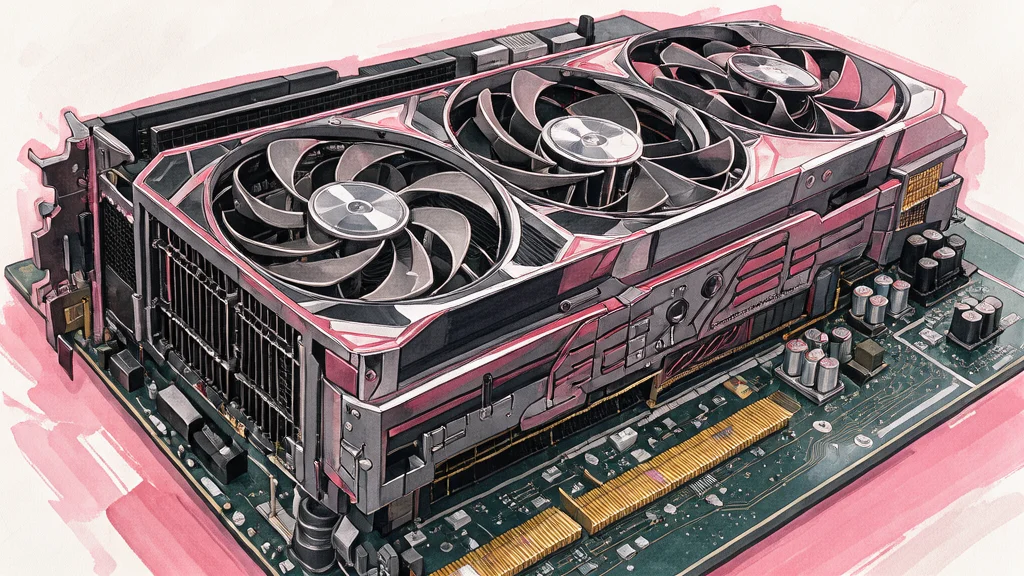
The cost of running an AI solution depends on whether you choose a local model or a cloud API. Local models require a significant upfront investment in hardware, such as a powerful GPU or a high-end laptop with Apple Silicon. For example, a MacBook Pro with a powerful chip and large RAM configuration can cost several thousand dollars. However, once you have the hardware, there are no ongoing costs for API access, and you can run the model indefinitely without additional fees. This makes local models cost-effective for heavy users who need unlimited access to AI capabilities.
Cloud APIs, on the other hand, offer a low-cost entry point with no upfront hardware requirements. LLMFreeAPI is free to use, making it an attractive option for users who want to access powerful models without investing in expensive hardware. However, if you exceed the daily request limits, you may need to pay for additional usage, depending on the provider’s pricing model. For light users or those with limited budgets, cloud APIs provide a cost-effective solution without the need for significant hardware investments.
Upfront Hardware Costs
Local models require a significant upfront investment in hardware. High-end GPUs can cost over a thousand dollars, while Apple Silicon laptops with large RAM configurations can exceed three thousand dollars. These costs can be prohibitive for users who do not need the highest performance or who prefer not to invest in dedicated hardware.
Ongoing API Costs
Cloud APIs like LLMFreeAPI offer free access, eliminating ongoing costs for most users. However, if you exceed the daily request limits, you may need to pay for additional usage. This makes cloud APIs cost-effective for light users, while heavy users may find local models more economical in the long run.
- Local models require a significant upfront hardware investment.
- Cloud APIs offer free access with no ongoing costs for most users.
- Heavy users may find local models more cost-effective long-term.
- Light users benefit from the low entry cost of cloud APIs.
Use Cases: Coding, Writing, and Statistics
Different use cases have different requirements for AI models. For coding tasks, local models are ideal if you need to process proprietary code snippets without exposing them to external servers. You can run a local model on your machine, ensuring that your code remains private and secure. Cloud APIs like LLMFreeAPI are also excellent for coding assistance, offering quick access to a capable model without hardware constraints. The choice depends on whether you prioritize privacy or convenience.
For writing and proofreading, both local and cloud models can be effective. Local models allow you to work offline and keep your drafts private, while cloud APIs provide easy access to a powerful model from any device. Statistics and data analysis tasks may benefit from local models if you need to process large datasets locally, ensuring that your data remains secure. However, cloud APIs can handle complex queries efficiently, making them suitable for users who need quick insights without managing local infrastructure.
Coding with Local Models
Local models are ideal for coding tasks where privacy is paramount. You can process proprietary code snippets without exposing them to external servers. This is particularly useful for developers working on sensitive projects or those who prefer to keep their codebase private. Local models also allow for offline work, which can be beneficial in environments with limited internet access.
Writing with Cloud APIs
Cloud APIs like LLMFreeAPI provide easy access to a powerful model for writing and proofreading tasks. You can access the API from any device with an internet connection, making it convenient for users who work across multiple devices. The API’s compatibility with standard libraries simplifies integration into writing tools, enhancing productivity and efficiency.
- Local models are ideal for coding with proprietary code.
- Cloud APIs provide easy access for writing and proofreading.
- Local models allow for offline work and data privacy.
- Cloud APIs offer convenience and accessibility for writing tasks.

Testing Refusals and Model Behavior
Testing how an AI model handles refusals is crucial for understanding its behavior, especially for uncensored or unrestricted models. You can test refusals using a free keyless API like LLMFreeAPI by sending specific prompts that might trigger a refusal. The API’s model, free-ai, is fine-tuned to refuse less than commercial assistants, but it still adheres to two hard rules: no sexual content involving minors and no operational instructions for mass-casualty weapons. By testing these scenarios, you can determine how the model responds to different types of content and whether it meets your needs.
Local models also allow you to test refusals by experimenting with different prompts and observing the model’s responses. You can customize the model’s behavior by adjusting parameters such as temperature and top-p, which influence the model’s creativity and adherence to constraints. This flexibility allows you to fine-tune the model to better suit your specific use case, whether it’s coding, writing, or statistics.
Testing Refusals with LLMFreeAPI
LLMFreeAPI allows you to test refusals by sending specific prompts to the API. The model, free-ai, is designed to refuse less than commercial assistants, but it still adheres to two hard rules. By testing these scenarios, you can determine how the model responds to different types of content and whether it meets your needs. This is particularly useful for users who want to ensure that the model behaves as expected in various contexts.
Customizing Local Model Behavior
Local models allow you to customize behavior by adjusting parameters such as temperature and top-p. These parameters influence the model’s creativity and adherence to constraints, allowing you to fine-tune the model to better suit your specific use case. This flexibility is particularly useful for users who need precise control over the model’s output, such as in coding or statistical analysis.
- Test refusals using specific prompts on LLMFreeAPI.
- Local models allow customization of behavior via parameters.
- LLMFreeAPI adheres to two hard rules for refusals.
- Adjusting parameters can fine-tune local model output.
Choosing the Right Model for Your Needs
Choosing the right AI solution depends on your specific needs, including privacy, speed, cost, and use case. If privacy is your top priority, local models offer the highest level of data control, as all processing occurs on your device. However, they require significant hardware investment and technical configuration. Cloud APIs like LLMFreeAPI offer convenience and accessibility, with no upfront hardware costs, but they involve transmitting data to a remote server. For users who need a balance between privacy and convenience, cloud APIs provide a practical solution.
For users who prioritize speed and performance, local models on high-end hardware can achieve impressive speeds, but they may require optimization and cooling management. Cloud APIs offer consistent speeds regardless of local hardware, making them suitable for users with limited resources. Consider your specific use case, such as coding, writing, or statistics, and evaluate whether local or cloud solutions better meet your needs. By understanding the trade-offs, you can make an informed decision that aligns with your technical capabilities and goals.
Evaluating Privacy Needs
If privacy is your primary concern, local models offer the highest level of data control. All processing occurs on your device, ensuring that your data remains private. However, this comes at the cost of hardware investment and technical complexity. Cloud APIs involve transmitting data to a remote server, which may introduce privacy risks, but they offer convenience and accessibility.
Assessing Performance Requirements
For users who prioritize speed and performance, local models on high-end hardware can achieve impressive speeds. However, they may require optimization and cooling management. Cloud APIs offer consistent speeds regardless of local hardware, making them suitable for users with limited resources. Consider your specific use case and evaluate whether local or cloud solutions better meet your performance needs.
- Local models offer maximum privacy but require hardware investment.
- Cloud APIs offer convenience but involve data transmission.
- Local models can achieve high speeds on high-end hardware.
- Cloud APIs provide consistent speeds regardless of local hardware.

Conclusion: Balancing Privacy and Performance
In conclusion, both local LLMs and cloud APIs offer distinct advantages and trade-offs. Local models provide maximum privacy and control over your data, but they require significant hardware investment and technical configuration. Cloud APIs like LLMFreeAPI offer convenience, accessibility, and cost-effectiveness, but they involve transmitting data to a remote server. The choice between these two solutions depends on your specific needs, including privacy, speed, cost, and use case.
For users who prioritize privacy and have the necessary hardware, local models are the best option. They allow you to process data on your device, ensuring that your information remains private. For users who value convenience and accessibility, cloud APIs provide a practical solution with no upfront hardware costs. By understanding the trade-offs, you can choose the solution that best aligns with your technical capabilities and goals, whether it’s coding, writing, or statistics.
Explore more about uncensored AI and model comparisons in our related articles: Is Uncensored AI Actually Worth the Hype for Daily Use?, Free Keyless API vs Local Models: Which Fits Your Needs?, and How to Test AI Refusals Using a Free Keyless API. For more information on building agents or optimizing local models, check out How to Build AI Agents with n8n and Free APIs and How to Optimize Llama.cpp for Maximum Performance.
Final Recommendations
For users who prioritize privacy and have the necessary hardware, local models are the best option. They allow you to process data on your device, ensuring that your information remains private. For users who value convenience and accessibility, cloud APIs provide a practical solution with no upfront hardware costs. Consider your specific needs and choose the solution that best aligns with your goals.
Further Reading
Explore more about uncensored AI and model comparisons in our related articles: Is Uncensored AI Actually Worth the Hype for Daily Use?, Free Keyless API vs Local Models: Which Fits Your Needs?, and How to Test AI Refusals Using a Free Keyless API. For more information on building agents or optimizing local models, check out How to Build AI Agents with n8n and Free APIs and How to Optimize Llama.cpp for Maximum Performance.
- Local models offer maximum privacy but require hardware investment.
- Cloud APIs offer convenience but involve data transmission.
- Choose local for privacy, cloud for convenience.
- Consider your specific needs when making a decision.
Test the keyless API right now on the home page to see how unrestricted AI handles your prompts without any setup.
Home →